Future-proofing the change function in insurance: From demos to delivered value
 by Louise Everett

On Tuesday 10 November, ECMS hosted the third and final Change & Transformation forum in our 2026 roundtable series at our offices in London, bringing together nine C-Suite leaders, transformation heads, and specialists within insurance to discuss evolving challenges, opportunities and priorities.
The conversation, held under Chatham House rules, ranged from the ongoing importance of winning hearts and minds in driving change adoption to measuring value, funding technology-led change programmes, and AI governance.
I co-hosted this discussion alongside David Wright, a member of our Advisory Panel who specialises in operating model design and large-scale change.
Here are two headline takeaways ahead of our full report.
Executive sponsorship: still essential but not enough alone
Buy-in has been a constant theme across this series, from our February Change & Transformation roundtable to our June forum. This time, leaders were more specific about where adoption stalls.
Executive appetite for AI is high, yet this doesn't always extend to middle management, where incentives aren't always as clear and concerns about job security run deeper. Change leaders say this can lead to accountability challenges, deflection and resistance.
Some change leaders also noted that executives themselves need a realistic view of what AI can deliver, and how quickly, as vendor claims may not hold true when evaluated against individual organisations' complexities.
The consensus was that adoption follows when people can see how change improves their own day-to-day. As David put it:
"If you can start with some of the use cases that make people's lives easier, then that helps with adoption. It helps people realise, 'This isn't taking my job away. This is actually allowing me to focus on the higher-level work that really adds value."
From demo to delivery: the gap is now industrialisation
Earlier in the year, a change leader joked that they had more pilots than British Airways.
Several months on, the challenge has moved on from getting pilots off the ground to industrialising and scaling proofs of concept.
A compelling demo can be built quickly, often on sanitised data without the exceptions, process changes and shifts in roles and KPIs that real-world change delivery surfaces.
Leaders agreed that alongside any demo of a new platform or process optimisation, organisations need to think through what rolling it out would actually involve across people, process, technology, data and governance, and agree what good looks like before successful experiments scale.
The continued need for standardisation
Scaling also means agreeing common ways of working across the business. David's approach is to standardise around roughly 80% common requirements, leaving room for genuine local needs, and it starts with one simple question:
"When scoping common requirements for change programmes, I often take people from different parts of the business and come up with a straw man. Then I ask the question: 'Why can't this work for you?' This allows me to understand the issues. Some are real and mean the solution needs to be revised. Others, like 'that's not how we do it today', will fall away as the solution is better explained to stakeholders."
Genuine constraints, such as regulatory requirements, get built in, while habit gets challenged. As David noted, the sceptics in the room often go on to become the change champions who bring their colleagues on board.
Value realisation (and demonstrating it clearly to boards) matters, too. Freed-up hours and cost reduction are the easiest metrics to reach for, but stronger controls and shorter cycle times can deliver just as much for the business and its customers.
Is your change function ready to turn ambition into measurable value?
Across all three roundtables this year, one message has held firm: start with a clear business problem, prove value in focused use cases, then scale what works.
We'll be bringing together insights from across this series and our original research in a refreshed edition of our report, Future-proofing the change function in insurance, coming soon.
Alongside the themes above, the report will explore why AI governance needs to work across the enterprise rather than team by team, and how standardising around common requirements can create scale and consistency without losing sight of genuine local needs.
Many thanks to the change leaders who joined our discussion, and to all who have contributed to this series throughout the year.
If you'd like to scope your change roadmap or have it challenged independently, or would like to attend a future roundtable, get in touch on contact@ecmanagedsolutions.com.
Fresh Content
Explore our latest market insights, career advice, and more.

Future-proofing the change function in insurance: From demos to delivered value
Future-proofing the change function in insurance: From demos to delivered value
Read more
The insurance transformation agenda: Perspective from a roundtable on data, AI, governance and growth
The insurance transformation agenda: Perspective from a roundtable on data, AI, governance and growth
Read more
ECMS appoints Louise Everett as Partner in insurance

Future-proofing the change function in insurance: From adoption to intelligent automation
Future-proofing the change function in insurance: From adoption to intelligent automation
Read more
Are insurers being left behind when it comes to AI?
ECMS appoints Advisory Panel to strengthen delivery across change, technology and transformation
ECMS appoints Advisory Panel to strengthen delivery across change, technology and transformation
Read more
How do you future proof the change function in insurance?

The data journey in insurance and AI readiness: perspectives from insurance leaders
The data journey in insurance and AI readiness: perspectives from insurance leaders
Read more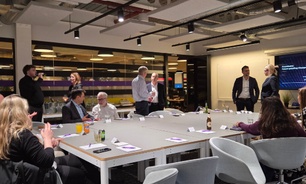
ECMS holds roundtable on futureproofing change and transformation in insurance
ECMS hosts data in insurance roundtable for senior data leaders

AI in audit: creating an AI-ready culture

Implementation failures vs successes: how to integrate AI into your business
Implementation failures vs successes: how to integrate AI into your business
Read more
Assessing the impact of AI on the audit industry: a roundtable discussion

Associate community join us for networking and social in our London office

From data centre exit to cloud resilience in 18 months for global insurer
From data centre exit to cloud resilience in 18 months for global insurer
Read more
Driving cost control in a data centre exit programme for a global insurer
Driving cost control in a data centre exit programme for a global insurer
Read more
Transforming a global insurer’s underwriting process
Transforming a global insurer’s underwriting process
Read more
Urgent data remediation programme for a global insurer
Urgent data remediation programme for a global insurer
Read more
Building a European centre of excellence for a leading global bank
Building a European centre of excellence for a leading global bank
Read more
ECMS implements cloud and application migration for leading international insurer
ECMS implements cloud and application migration for leading international insurer
Read more
ECMS appoints Estelle James as new managing partner

ECMS cuts application release time in half for leading multinational insurer
ECMS cuts application release time in half for leading multinational insurer
Read more
The power of four: ECMS upgrades outdated finance market infrastructure to support Hong Kong’s financial stability
The power of four: ECMS upgrades outdated finance market infrastructure to support Hong Kong’s financial stability
Read more
Lifting the lid: Why you shouldn’t be afraid to review your tech strategy
Lifting the lid: Why you shouldn’t be afraid to review your tech strategy
Read more
Five themes for change in 2025

Regulation and economic pressures are altering the scope of change programmes
Regulation and economic pressures are altering the scope of change programmes
Read more
Optimising Hardware Lifecycle Management: ECMS’ Strategic Impact on a Leading Financial Services Provider
Optimising Hardware Lifecycle Management: ECMS’ Strategic Impact on a Leading Financial Services Provider
Read more
Streamlining tech for maximum efficiency: Avoiding unnecessary waste

Cloud adoption: Evolving your strategy to maximise the benefits

Data Remediation: Fixing common data problems in insurance

Revolutionising Wagering Systems: A Case Study in Agile Transformation and Resource Management
Revolutionising Wagering Systems: A Case Study in Agile Transformation and Resource Management
Read more
Automating underwriting: embedding artificial intelligence in insurance business
Automating underwriting: embedding artificial intelligence in insurance business
Read more
The social responsibility of insurance: Insights from enriched data solutions
The social responsibility of insurance: Insights from enriched data solutions
Read more
Claims Optimisation of a Global Insurance Broker using Low Code
Claims Optimisation of a Global Insurance Broker using Low Code
Read more
The law of unintended consequences
The law of unintended consequences
Read more
Technology challenges beyond COVID
Technology challenges beyond COVID
Read more
Comprehensive Windows 10 Migration For Specialty Insurer
Comprehensive Windows 10 Migration For Specialty Insurer
Read more
ESG: Why insurers must be the change
ESG: Why insurers must be the change
Read more
Breaking free from the pack
Breaking free from the pack
Read more
Fail to plan, plan to fail

The truth about unstructured data
The truth about unstructured data
Read more
Walking the talk with corporate culture
Walking the talk with corporate culture
Read more
ESG: Putting words into action
ESG: Putting words into action
Read more
ECMS partners with Recite Me to provide a fully inclusive and accessible digital experience
ECMS partners with Recite Me to provide a fully inclusive and accessible digital experience
Read more
No half measures – dig deep for digital transformation
No half measures – dig deep for digital transformation
Read more
Just-in-case versus just-in-time: A supply chain analogy
Just-in-case versus just-in-time: A supply chain analogy
Read more
IFRS17 Programme Structure and Delivery
IFRS17 Programme Structure and Delivery
Read more
Digital transformation barely scratches the surface for P&C insurers and brokers
Digital transformation barely scratches the surface for P&C insurers and brokers
Read more
Why you don't want to be a slow husky
Why you don't want to be a slow husky
Read more
True inclusion is driven by company culture
True inclusion is driven by company culture
Read more
ESG could be make or break for the insurance industry
ESG could be make or break for the insurance industry
Read more
Putting learning before earning
Putting learning before earning
Read more
RPA Implementation, Global Reinsurance
RPA Implementation, Global Reinsurance
Read more
Automation Testing, Insurance
Automation Testing, Insurance
Read more
Programme Management Office, Global (re)insurer
Programme Management Office, Global (re)insurer
Read more
MDM Technology Design and Delivery, Broker, Insurance
MDM Technology Design and Delivery, Broker, Insurance
Read more
Capital Remediation Project Deployment, Insurance
Capital Remediation Project Deployment, Insurance
Read more
BI Database and Reporting Suite Project, Insurance
BI Database and Reporting Suite Project, Insurance
Read more
Technology Domain Consolidation and Redesign
Technology Domain Consolidation and Redesign
Read more
Application Technology Project - Review to support Windows 10 Desktop Delivery
Application Technology Project - Review to support Windows 10 Desktop Delivery
Read more
Where is your PMO?
Where is your PMO?
Read more