The insurance transformation agenda: Perspective from a roundtable on data, AI, governance and growth
 by Estelle James

How do you scale AI when your data foundations and technology stack are still being rebuilt or replatformed? That was the question on Wednesday 14 October, when Robin Muir and I hosted senior insurance leaders at our London office: transformation executives, chief data officers and technology specialists.
The private roundtable, ‘The Insurance Transformation Agenda: Data, AI, Governance & Growth’, was run jointly by ECMS managed solutions and the specialist contingent recruitment arm of Eames Group, Eames Consulting and covered four themes:
- Replatforming strategies and lessons learned from the process
- The shift from data and analytics to AI-first approaches
- Maturing governance and operating models in the era of accelerated automation
- Balancing AI at scale with foundational data investment
Discover key takeaways:
Replatforming strategies in insurance and lessons learned
Older insurance organisations originally built their platforms for data analytics, not AI. This has driven substantial investment in migrating data, applications and systems, as organisations seek to transform legacy data estates and achieve targeted optimisations.
However, as one leader put it, replatforming alone does not deliver business value. When a problem is treated as a platform problem by default, the true business value may be skipped.
Starting without clearly defined business outcomes, what the business wants to achieve, may result in a costly data lakehouse, an expensive digital store that doesn’t in itself ensure data interoperability, so that CEOs wonder what return they gained from platform spend.
From data and analytics businesses to AI-enabled organisations
Although insurance is good at using the language of agility, data and AI leaders say it is not always as good at putting it into practice. On the other hand, for insurers who are more advanced in their automation journeys, there is also a question mark over how embedding AI now will impact and price into future cost models.
As I wrote in the September 2026 issue of the ECMS60 newsletter, future costs aren’t always priced in when insurers implement AI. Leaders suggested that remains true.
Organisations are still working out the future cost model of AI: how scalable it is, and how locked in they will become to a particular model or ecosystem.
The pressure to move anyway is considerable. One leader observed that fear of being out of date is itself becoming a blocker to progress. They added that the industry often talks about AI as the solution rather than part of it and discusses it separately from business objectives.
What the most successful firms have in common, in ECMS’ delivery experience, is that they hunt and solve defined problems, rather than simply sprinkling automation on top of systems that don’t fully support it.
People and capability: How technology-led transformation delivery squads have changed
Although not on the official agenda, people and capability questions inevitably came up. Data and AI leaders shared that resistance to AI adoption still often lies more at the senior end, while junior workers entering the market are increasingly AI-native.
A key takeaway was that Proof of Concept (POC) teams in insurance are now structured very differently to how they were a few years ago, with squads often consisting of very young AI-native technology specialists plus an experienced insurance business analyst, project manager, and subject matter expert.
How data and AI governance and operating models are evolving as automation accelerates
Previously, the conversation focused on uneven data quality and interoperability. Now, governance is increasingly top-of-mind. Data and AI leaders confirmed that governance maturity is still uneven across organisations, as we found at a previous data roundtable held with 12 CDOs this year.
Some firms do not yet have sufficient governance for the degree to which they have embedded automation which creates audit risk. Firms are positioning the need for governance as regulatory protection, rather than red tape that would curtail ongoing use case exploration and process optimisation.
Leaders in attendance argued for governance by design (rather than by email), with the same identity access controls applying to people and AI. With IT often having taken over governance, leaders are concerned about gaps between policy and practice.
Insurance has often lagged behind other financial services in identity access management with persistent issues.
In summary
These events bring data, AI and insurance leaders together to compare notes candidly on what is delivering lasting value and where the industry still needs to evolve. They provide valuable opportunities to share the kind of peer intelligence that fosters a stronger market for all. Thank you to everyone who joined us and shared their perspective so openly.
Our full report on the insurance agenda concerning data, AI, governance and growth is coming soon. Combining insights from roundtables across 2026 with our latest research, it will explore how firms are scaling AI while protecting foundational investment, and where data and AI leaders plan to focus spend next.
If you would like to receive ECMS’ original research or an invitation to events for data and AI leaders, get in touch at contact@ecmanagedsolutions.com.
Fresh Content
Explore our latest market insights, career advice, and more.

The insurance transformation agenda: Perspective from a roundtable on data, AI, governance and growth
The insurance transformation agenda: Perspective from a roundtable on data, AI, governance and growth
Read more
ECMS appoints Louise Everett as Partner in insurance

Future-proofing the change function in insurance: From adoption to intelligent automation
Future-proofing the change function in insurance: From adoption to intelligent automation
Read more
Are insurers being left behind when it comes to AI?

ECMS appoints Advisory Panel to strengthen delivery across change, technology and transformation
ECMS appoints Advisory Panel to strengthen delivery across change, technology and transformation
Read more
How do you future proof the change function in insurance?

The data journey in insurance and AI readiness: perspectives from insurance leaders
The data journey in insurance and AI readiness: perspectives from insurance leaders
Read more
ECMS holds roundtable on futureproofing change and transformation in insurance

ECMS hosts data in insurance roundtable for senior data leaders

AI in audit: creating an AI-ready culture

Implementation failures vs successes: how to integrate AI into your business
Implementation failures vs successes: how to integrate AI into your business
Read more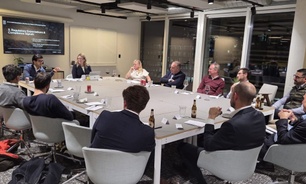
Assessing the impact of AI on the audit industry: a roundtable discussion

Associate community join us for networking and social in our London office

Darren Reilly rejoins ECMS as client delivery director

From data centre exit to cloud resilience in 18 months for global insurer
From data centre exit to cloud resilience in 18 months for global insurer
Read more
Driving cost control in a data centre exit programme for a global insurer
Driving cost control in a data centre exit programme for a global insurer
Read more
Transforming a global insurer’s underwriting process
Transforming a global insurer’s underwriting process
Read more
Urgent data remediation programme for a global insurer
Urgent data remediation programme for a global insurer
Read more
Building a European centre of excellence for a leading global bank
Building a European centre of excellence for a leading global bank
Read more
ECMS implements cloud and application migration for leading international insurer
ECMS implements cloud and application migration for leading international insurer
Read more
ECMS appoints Estelle James as new managing partner

ECMS cuts application release time in half for leading multinational insurer
ECMS cuts application release time in half for leading multinational insurer
Read more
The power of four: ECMS upgrades outdated finance market infrastructure to support Hong Kong’s financial stability
The power of four: ECMS upgrades outdated finance market infrastructure to support Hong Kong’s financial stability
Read more
Lifting the lid: Why you shouldn’t be afraid to review your tech strategy
Lifting the lid: Why you shouldn’t be afraid to review your tech strategy
Read more
Five themes for change in 2025

Regulation and economic pressures are altering the scope of change programmes
Regulation and economic pressures are altering the scope of change programmes
Read more
Optimising Hardware Lifecycle Management: ECMS’ Strategic Impact on a Leading Financial Services Provider
Optimising Hardware Lifecycle Management: ECMS’ Strategic Impact on a Leading Financial Services Provider
Read more
Streamlining tech for maximum efficiency: Avoiding unnecessary waste

Cloud adoption: Evolving your strategy to maximise the benefits

Data Remediation: Fixing common data problems in insurance

Revolutionising Wagering Systems: A Case Study in Agile Transformation and Resource Management
Revolutionising Wagering Systems: A Case Study in Agile Transformation and Resource Management
Read more
Automating underwriting: embedding artificial intelligence in insurance business
Automating underwriting: embedding artificial intelligence in insurance business
Read more
The social responsibility of insurance: Insights from enriched data solutions
The social responsibility of insurance: Insights from enriched data solutions
Read more
Claims Optimisation of a Global Insurance Broker using Low Code
Claims Optimisation of a Global Insurance Broker using Low Code
Read more
The law of unintended consequences
The law of unintended consequences
Read more
Technology challenges beyond COVID
Technology challenges beyond COVID
Read more
Comprehensive Windows 10 Migration For Specialty Insurer
Comprehensive Windows 10 Migration For Specialty Insurer
Read more
ESG: Why insurers must be the change
ESG: Why insurers must be the change
Read more
Breaking free from the pack
Breaking free from the pack
Read more
Fail to plan, plan to fail

The truth about unstructured data
The truth about unstructured data
Read more
Walking the talk with corporate culture
Walking the talk with corporate culture
Read more
ESG: Putting words into action
ESG: Putting words into action
Read more
ECMS partners with Recite Me to provide a fully inclusive and accessible digital experience
ECMS partners with Recite Me to provide a fully inclusive and accessible digital experience
Read more
No half measures – dig deep for digital transformation
No half measures – dig deep for digital transformation
Read more
Just-in-case versus just-in-time: A supply chain analogy
Just-in-case versus just-in-time: A supply chain analogy
Read more
IFRS17 Programme Structure and Delivery
IFRS17 Programme Structure and Delivery
Read more
Digital transformation barely scratches the surface for P&C insurers and brokers
Digital transformation barely scratches the surface for P&C insurers and brokers
Read more
Why you don't want to be a slow husky
Why you don't want to be a slow husky
Read more
True inclusion is driven by company culture
True inclusion is driven by company culture
Read more
ESG could be make or break for the insurance industry
ESG could be make or break for the insurance industry
Read more
Putting learning before earning
Putting learning before earning
Read more
RPA Implementation, Global Reinsurance
RPA Implementation, Global Reinsurance
Read more
Automation Testing, Insurance
Automation Testing, Insurance
Read more
Capital Remediation Project Deployment, Insurance
Capital Remediation Project Deployment, Insurance
Read more
Programme Management Office, Global (re)insurer
Programme Management Office, Global (re)insurer
Read more
MDM Technology Design and Delivery, Broker, Insurance
MDM Technology Design and Delivery, Broker, Insurance
Read more
BI Database and Reporting Suite Project, Insurance
BI Database and Reporting Suite Project, Insurance
Read more
Technology Domain Consolidation and Redesign
Technology Domain Consolidation and Redesign
Read more
Application Technology Project - Review to support Windows 10 Desktop Delivery
Application Technology Project - Review to support Windows 10 Desktop Delivery
Read more
Where is your PMO?
Where is your PMO?
Read more